

What the FEMA 50% Rule Actually Means
At its core, the FEMA 50% Rule states that if the cost of improving a home exceeds 50% of its current market value-not including the land-you must bring the entire structure into full compliance with current flood regulations.
This requirement applies to homes located in Special Flood Hazard Areas, including AE and VE zones throughout Tampa Bay. Although the rule may sound straightforward, the calculations behind it are highly nuanced.
Local municipalities determine the home’s assessed value, and this value-not what the homeowner paid-is used to calculate the allowable renovation threshold. If proposed improvements exceed that threshold, the home is classified as a “substantial improvement,” triggering elevation requirements and major structural upgrades.
Additionally, it’s important to understand that the FEMA 50% Rule applies to cumulative improvements within a set time period, which varies by jurisdiction. Even separate projects may add up. Also, any work classified as “repair” after storm damage may also trigger substantial improvement rules if the cost of the repairs exceeds the 50% threshold.
FEMA 50% Rule Explained: How Renovation Costs Are Calculated
The calculation process is a critical part of the FEMA 50% Rule, and it often catches homeowners off guard. Municipalities require detailed cost breakdowns, including labor, materials, finishes, mechanical systems, and structural components.
Even if homeowners plan to handle work themselves, the city will assign market-rate values to labor to ensure accuracy. Because every component of the home must be considered, even seemingly small upgrades may push the project closer to the 50% limit.
Appliances, cabinetry, lighting fixtures, interior doors, flooring, and paint are all included in the calculation. The only costs that are typically exempt are cosmetic items like landscaping, detached structures, and certain non-permanent features.
Additionally, through Architectural + Interior Design, renovation plans are reviewed strategically to help homeowners achieve their goals without triggering substantial improvement requirements unintentionally.
In fact, understanding how costs are evaluated ensures more accurate budgeting and reduces the risk of mid-project complications.
What Happens If You Exceed the 50% Threshold?
If renovation costs exceed 50% of the home’s assessed value, the homeowner is required to bring the entire structure into compliance with current flood regulations. This often means elevating the home to or above Base Flood Elevation (BFE), upgrading mechanical systems, replacing outdated electrical components, and reinforcing structural elements.
For homes in VE zones, requirements can be even more stringent, potentially involving deep pile foundations, open-lattice foundations, or other engineering solutions designed to resist wave action.
These upgrades may significantly change both the budget and the project timeline. Although this may feel overwhelming, substantial improvement projects can also present unique opportunities.
When managed through Elevated Coastal Home Construction, homeowners can redesign their home with improved structural integrity, modern layouts, and enhanced long-term value.
These substantial improvements often result in lower insurance premiums and improved storm resilience. In fact, bringing the home into compliance protects your investment and supports future resale value!
Why the FEMA 50% Rule Exists
The FEMA 50% Rule is not designed to be restrictive-its purpose is to reduce flood risk and improve safety in regions vulnerable to storms and rising water. By requiring older homes to meet updated standards when undergoing significant renovations, FEMA aims to decrease the number of properties repeatedly damaged by floods.
This approach also helps stabilize insurance pools, reduce taxpayer-funded recovery efforts, and encourage homeowners to invest in resilient construction methods. Because Florida’s coastal risks are well understood, elevated and reinforced homes experience far fewer losses during hurricanes and major storms.
Beyond that, the rule helps ensure communities transition toward safer building practices over time. Using Custom Home Design + Build, these principles are integrated seamlessly into new construction and substantial improvement designs. Furthermore, although the rule may seem strict, it ultimately supports safer, more durable homes for coastal families.
How to Work Within the Rule Without Triggering Substantial Improvement
Homeowners often ask whether they can renovate their home without exceeding the 50% threshold. The answer depends on the scope of work, the home’s current assessed value, and the municipality’s rules.
In many cases, homeowners can still achieve beautiful, functional upgrades by phasing work strategically or focusing on specific spaces. For example, a homeowner may choose to renovate the kitchen and bathrooms first, then wait for reassessment before completing additional improvements.
Another option is to prioritize exterior updates that are exempt from the calculation, such as driveways, landscaping, or non-permanent outdoor upgrades. Moreover, working with design professionals through Custom Home Design + Build helps ensure your project stays within FEMA-compliant limits while still achieving your desired aesthetic.
Furthermore, thoughtful planning prevents unexpected delays and cost adjustments during permitting.
When Elevating the Home Becomes the Best Long-Term Option
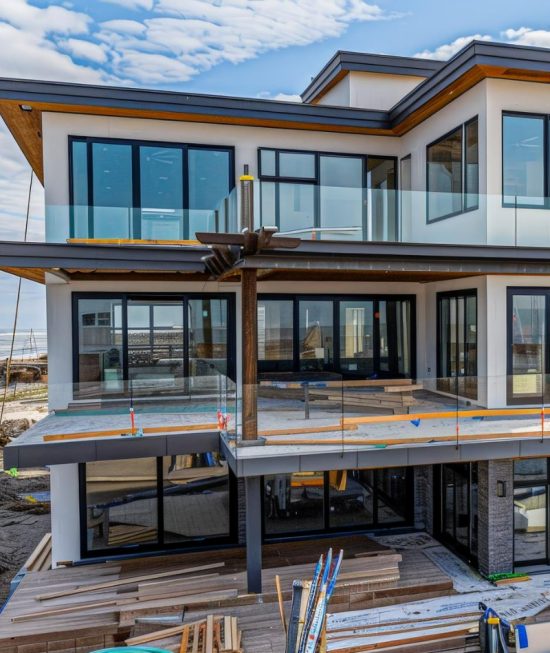
Although many homeowners try to avoid triggering substantial improvement, sometimes elevation becomes the most beneficial long-term decision. Elevating a coastal home dramatically reduces future flood risk, decreases insurance premiums, and improves resale value.
Homes elevated above BFE often feel brighter, more modern, and more connected to outdoor views. Elevated foundations may also create additional storage or parking areas beneath the main living level.
Through Elevated Coastal Home Construction, these elevated structures are engineered beautifully and efficiently, enhancing both safety and architectural appeal. Additionally, elevation provides an opportunity to redesign floor plans, improve circulation, and incorporate modern coastal features that older homes typically lack.
In fact, elevated homes age better and experience fewer moisture-related issues over time.
→ Learn more about Elevated Coastal Construction
How Insurance and Financing Are Affected
Insurance companies view elevated and code-compliant homes more favorably than older, non-compliant structures. As a result, meeting FEMA requirements may reduce premiums significantly, especially in high-risk flood zones. Conversely, renovating without compliance may result in higher long-term insurance costs.
Financing may also be influenced by the rule. Lenders typically require compliance for substantial improvement projects, and failing to meet these standards can affect loan approval. Also, updated flood maps and revised risk assessments may influence future insurance and financing options.
When building or renovating through Custom Home Design + Build, these financial considerations are planned alongside design and engineering. In fact, understanding these implications early helps homeowners make financially smart decisions.
Closing Thoughts
Understanding the FEMA 50% Rule ensures that your renovation or construction plans align with local regulations, long-term safety, and financial expectations. Although the rule can feel restrictive, it ultimately encourages stronger, more resilient homes-especially in coastal regions like Tampa Bay.
If you’re planning a renovation or new coastal home, explore how Elevated Coastal Home Construction and Custom Home Design + Build can help you navigate FEMA requirements with clarity, precision, and confidence.